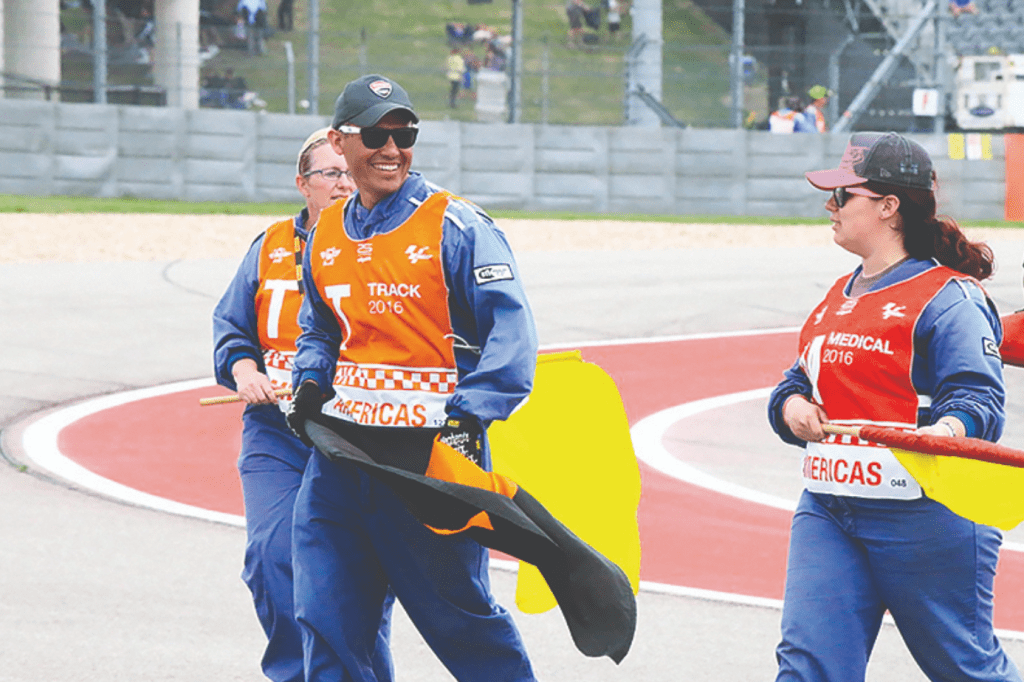
Contrary to popular belief, MotoGP riders are on their own once on track. There is no radio communication, pit-stop chats, or contact in any form once their crew leaves the grid.
This means flags and LED signs are one of the most important features that ensure the safety of riders on track. They provide information, guidance, and instructions at 200mph – but how do the riders know what they mean?
Flags are waved by marshals on the side of the track in relevant areas. There are 11 different flags that are used across a race weekend. They can be split into two different categories: those that inform riders of something, and those that instruct a rider.
Informative flags
Riders don’t need to take any action based on these flags, but they help communicate important information that they need to be aware of.
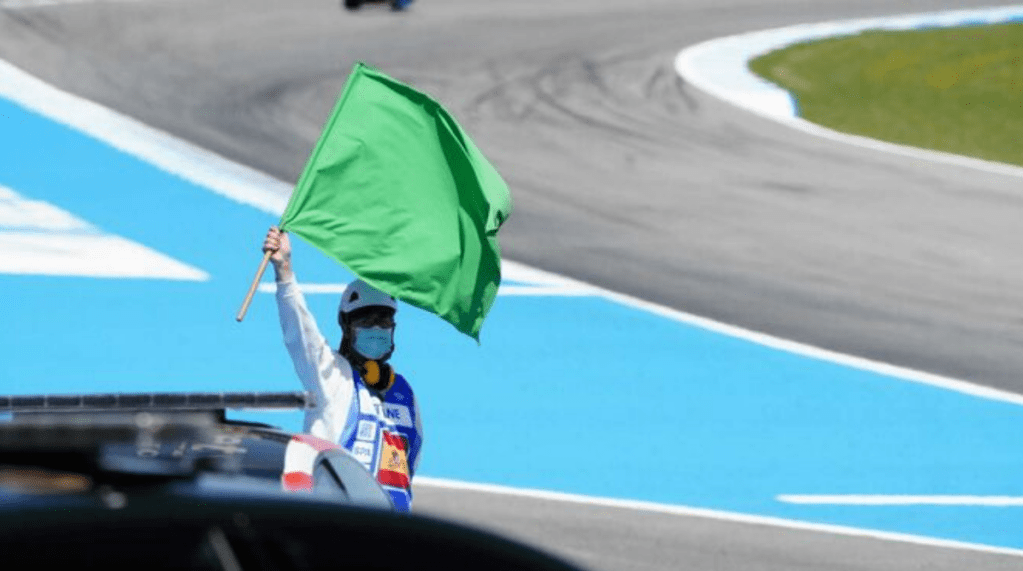
Green – the track clear and there are no restrictions to racing.
Waved at the exit of pit lane at the start of each session. It will also mark the end of a yellow-flagged sector (see below). The rules state that green flags must also be waved during the first lap of each session.
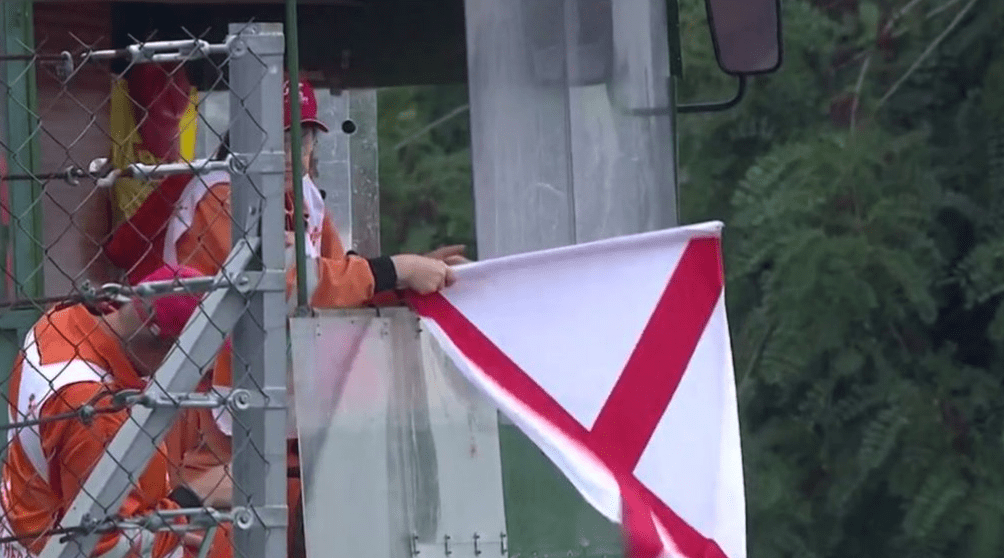
White with a red cross – the track is wet – proceed with caution.
This flag is used when there is rain on part of the track, which may affect the surface. Riders should be cautious.
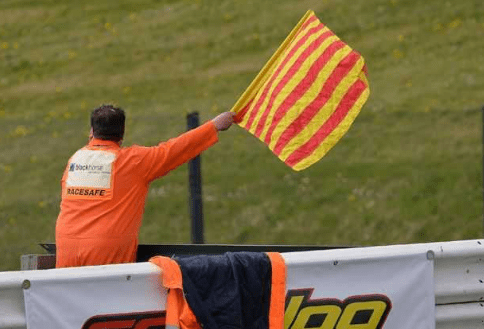
Red with yellow stripes – there is something on track that may cause an accident.
Anything from oil, gravel, dirt, or debris can bring this flag out. It informs riders that the traction and safety of the track may be affected, but it is not serious enough to bring out the red flags to be cleaned.
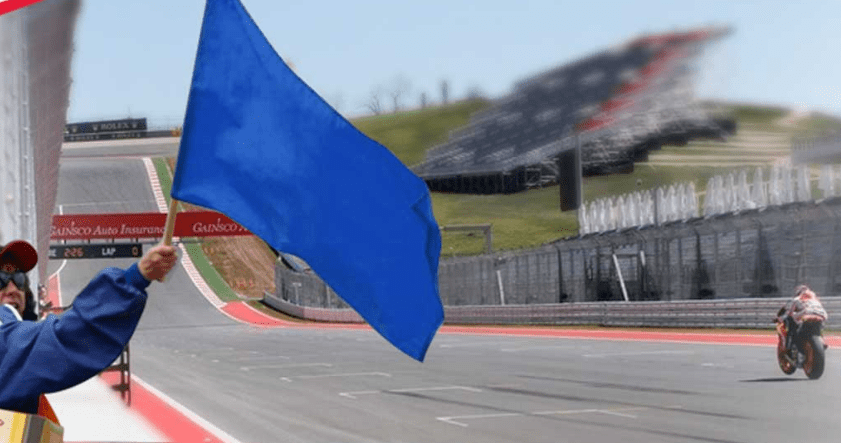
Blue – the rider behind you is faster, and you should move aside.
This flag informs riders of when they are about to be lapped by a faster rider, and for their safety should stay in line until they pass.
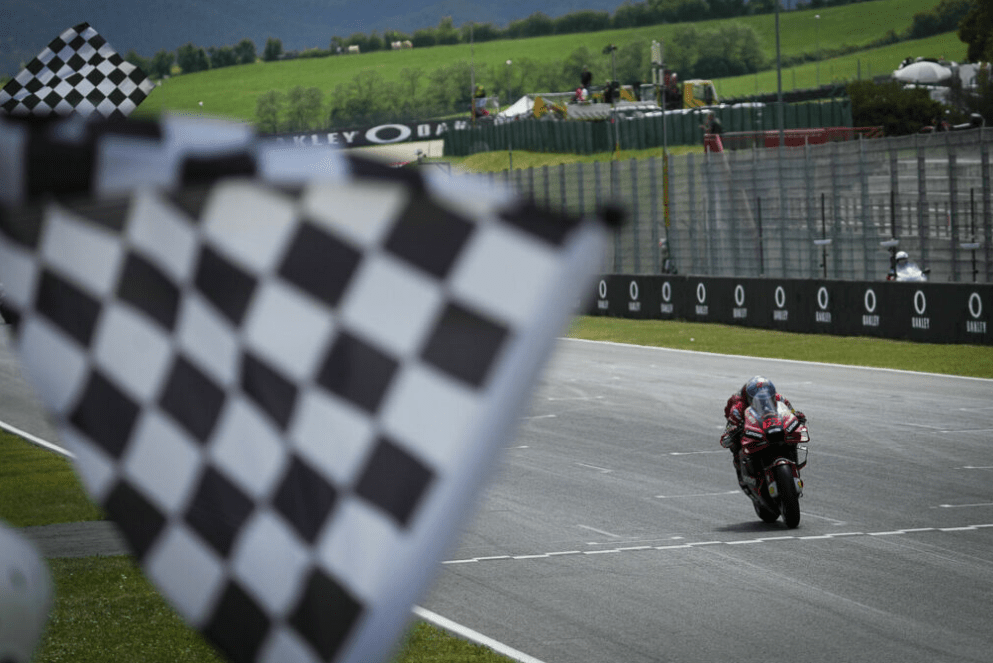
Chequered flag – the session has come to an end. Either the clock has reached zero, or all laps have been completed.
Perhaps the most famous flag of all, the chequered flag is waved at the end of every session.
instructional flags
These flags have rules attached – riders must act on what they communicate. Ignoring these flags can incur some pretty severe penalties.
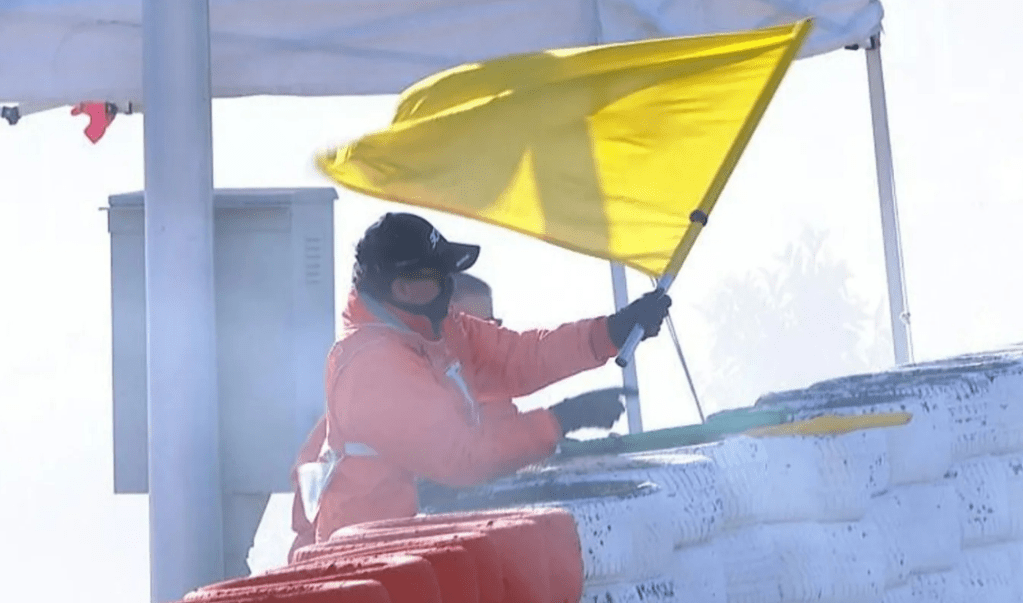
Yellow – there is a danger on, or near, the track, and riders must slow down and proceed with caution.
Used in many different situations, this flag is waved many times throughout the weekend. Most commonly, when a rider has crashed, an entire sector of the track comes under a yellow flag restriction – riders must slow down as there is a bike, rider, or marshals on track which need to be protected. Overtaking is also prohibited.
If this flag is waved during a qualifying session, any lap times set whilst the flag is out are invalid. This is to discourage reckless riding. The green flag will follow to indicate the danger is clear.
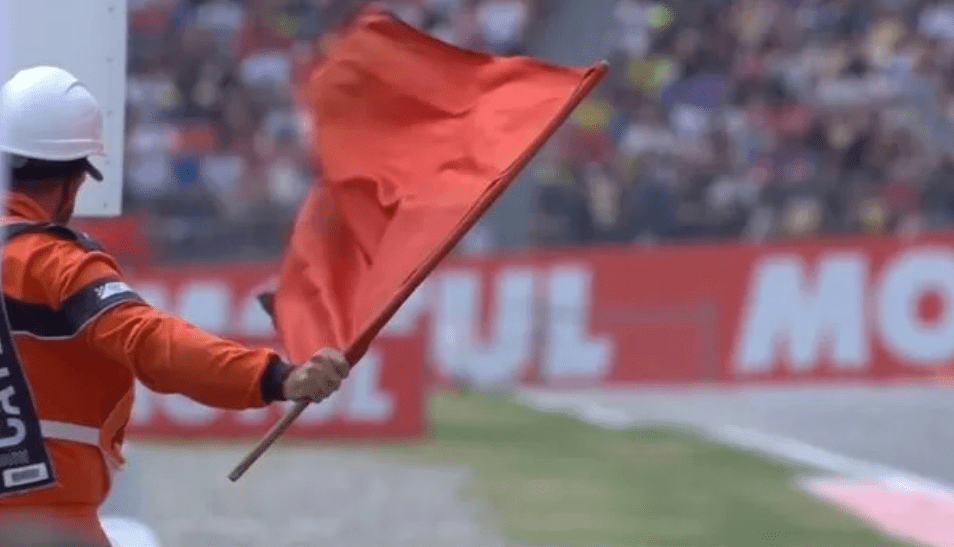
Red – the current session has been cancelled. Riders must return to the pits with caution.
The most serious flag, this is waved to indicate the current session has been cancelled early. This could be due to a severe crash that needs clearing up, or riders removed safely from the track; damage to safety features, such as air fences, that need to be repaired; or dangerous conditions including heavy rain and wind.
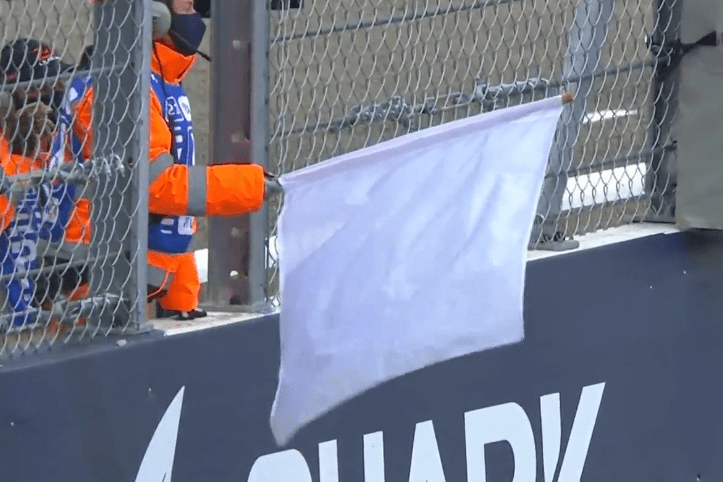
White – riders are allowed to change bikes if desired.
Waving this flag creates what is known as a “flag-to-flag” race. This is due to a change in weather conditions – usually rain getting heavier – and gives riders the option to swap onto a bike with a wet-weather setup.
Unlike cars, motorbikes cannot have a fast pitstop, so if wet tyres are needed they will swap the entire bike over. Teams will have a bike set up with warmed tyres, the riders will pull into the pits, jump off their old bike and straight onto the new one.
This isn’t used in Moto2 and Moto3, as riders only have one bike each.
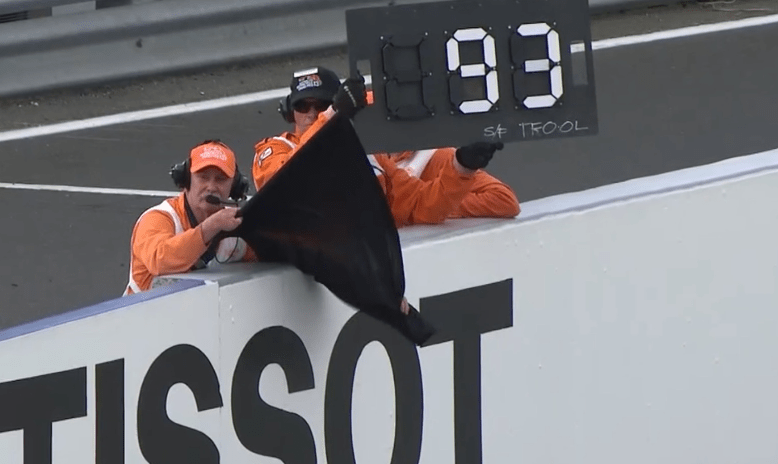
Black – a named rider must return to the pits, as they are unsafe to continue.
This flag comes directly from race direction, and will be waved alongside a board displaying a riders number. The named rider must leave the track if safe, or pull into the pits when they next pass.
It may be waved if a rider is riding dangerously, or if there is a technical issue with their bike.
Black with orange circle – indicates there is a fault with a bike, which could put themselves or other riders in danger.
Lovingly referred to as the “meatball” flag, this will also be shown alongside a number. The ride in question must pull off the track or into the pits immediately. It could be due to several factors, but is often the likes of an oil leak or smoking.
On their return to the pits, the bike must be inspected before it is allowed to be ridden again.


 Elbows Down
Leave a comment