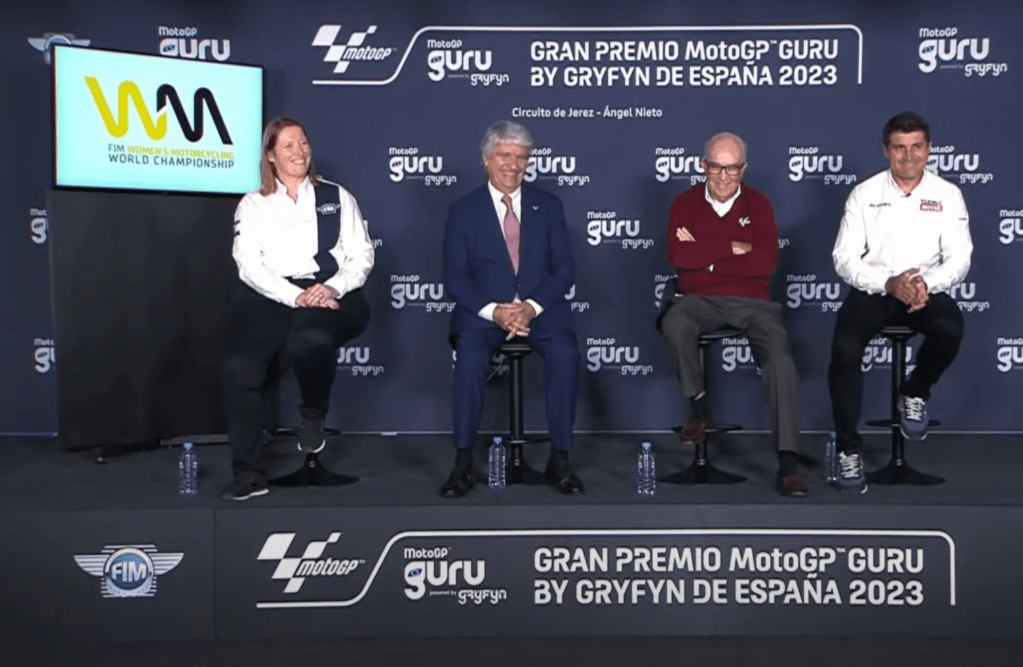
Breaking: the FIM enters the 21st century. Five years after Formula 1 created W Seieres, a female-only racing series to promote women in motorsport, the FIM Women’s Motorcycling World Championship will arrive in 2024. This new championship aims to “create opportunities for female riders who are already competing”, by offering a stand-alone, 6-race series to take place during selected World Superbike weekends.
I will admit, my first reaction was one of pure excitement. As a woman interested in motorsport, it is hard to ignore the drought of female representation within motorbike racing, and it feels like a real progression that the FIM and Dorna are acknowledging that there are reasons behind this. However, reading deeper than the headline creates fears that this is a rather futile effort which fails to recognise and solve the real reasons behind a lack of female rider engagement.
So what will the FIM Women’s Motorcycling World Championship (we are yet to be told an abbreviated name) look like? So far, we only have a 20-minute press conference and a short press release to go off, both of which have been deliberately vague around the details.
You can watch the conference here, and read the release here.
What we know for certain, is that the series will be comprised of 6 races, taking place during selected World Superbike weekends, along with Supersport, and Supersport 300. It will be a single-manufacturer championship, as yet unnamed, in the hopes of creating a level field for the riders, with similarities to Supersport – who race 995cc twin-cylinder bikes- being cited. The FIM are keen to reiterate that it will be a professional series, and women riding in it will be able to live off the funding. Currently, that is all the hard facts we have, with a promise that more information is to come, once they have spoken to teams, riders and manufacturers in more depth.
At this point, it’s hard to criticise the FIM’s efforts. On the surface, it does look like an unrivalled opportunity for successful, female riders to gain accreditation and a well-deserved platform. However, I can’t help but feel that’s where the benefits end.
The biggest criticism that can be branded towards the FIM is the decision to make it a “final destination”- Gregorio Lavilla, WSBK sporting director series. This key fact tells me straight away that the FIM have no real ambition to tackle the cause of gender inequity in the sport. To understand why this is, we need to look all the way back to the beginning of riders’ careers, most of whom are sat on a minimoto seat before they can walk. This is where the funding needs to be injected. Finding ways to tackle outdated attitudes toward young girls learning to ride, encouraging academies to actively promote girls, and pushing for increased funding to assist with the inevitable barriers should be at the top of the to-do list for anyone that actually wants to increase gender representation. The Road to Moto GP is a brilliant collection of series, both national and regional, that pushes kids up to the next level of racing. In fact, it is the only real way to get a ride in Moto3 without fully self-funding. If the FIM want to create a female-only series, it must sit alongside the likes of the Northern Talent Cup, Junior GP, and Red Bull Rookies, and allow young girl the same opportunity to fight for a moto3 seat from the beginning.
A “final destination” series fails to tackle these primary issues of getting girls to a high-quality, professional level by adolescence. Carmelo Ezpelta hopes to “reach the best woman riders in the world”, but this lack of investment in feeder series means they will simply not be as talented as the men racing in Moto2 and MotoGP- where this new series is meant to sit alongside. This opens the floodgates for mockery and criticism when track times are compared to the men who have faced limited barriers their whole careers.
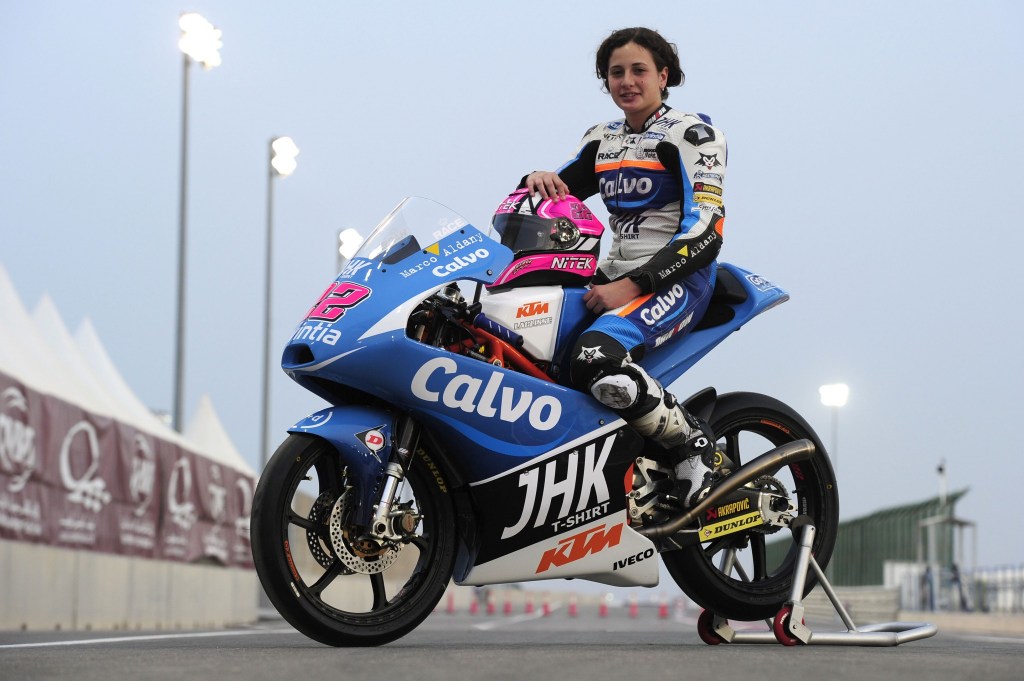
Feeding on from this, by creating a series that is parallel to MotoGP, a championship open to both men and women, there is a sneaking possibility that this may create a permanent barrier to entry for female riders into the premier classes. There is already pressure from the FIM and some fans for Ana Carrasco to move into this new championship. There needs to be some serious thinking about the effectiveness of a women’s championship designed to increase participation in MotoGP, if the only female rider in the paddock is already being encouraged out. Will this championship cement MotoGP, Moto2 and Moto3 as men’s only classifications for good? What pressures will women face to leave the paddock, now that we have our “own” series to focus on? Of course, this is all speculative, but there must be genuine consideration of unintended consequences.
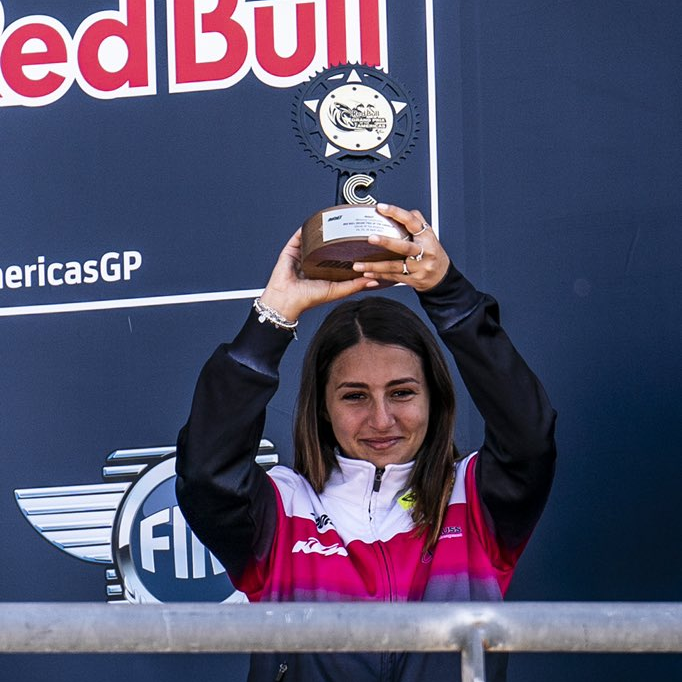
Many have responded with genuine enthusiasm to this announcement, citing increased visibility for female riders as their main supporting argument, and I too agree with this, don’t get me wrong. Any representation is a huge step forward, and is really fuelling a conversation about gender barriers in the sport. It feels like the right time for the FIM (and Dorna) too, with a huge surge of successful women behind the pit wall, most recently Angeluss MTA Racing and their manager Aurora Angelucci. The bottom line is that representation, in any form, matters.
Furthermore, the press conference suggested that the Women’s Motorcycling World Championship is definitely in the provisional stage, with much more yet to be revealed. Both Jorge Viegas and Gregorio Lavilla heavily hinted that 2024 will be a test run, and they have plans to introduce feeder series and other promotions down the line, once the World Championship is established in the weekend schedule. So let’s give the FIM credit where it is due, even the best management would struggle to have all the answers at this stage of development.
“Promotional cups can still be made, for sure”
Jorge Viegas
Saying that, there are a few key issues I would have expected the FIM to have answers to by now, with the evasion to confirm a broadcast making me particularly nervous. In the week that F1 refused to televise or stream their female feeder series, F1 Academy, despite huge demand and outrage on social media, it is concerning that the FIM refuse to confirm if it will be available to watch. When asked in the press conference if the series will be broadcast, Gregorio Lavilla replied with a very washy “We will start defining what’s best to make it happen, and make it happen good (…) we will put all the best efforts to make it the level we wish”. Surely for a series held on the same track as the broadcast WSBK and SSP classes, it should be a very easy “yes” to that question. The pessimist in me can’t help but feel like this is a conscious decision.
As a woman, I am of course happy that there is finally a space for other women to thrive in motorbike racing, however, we mustn’t be blind-sighted into thinking it can’t be better.

 Elbows Down
Leave a comment